
Uncategorized
How to Find a Hair Vendor: The Complete 2026 Guide
Aug
How to find a hair vendors? The wrong vendor can mean inconsistent bundles, ghosted messages, and customers asking for refunds. The right one becomes a genuine business partner who grows with you.
This guide walks you through exactly how to find a hair vendor you can trust, step by step: where to look, how to vet a supplier before you spend a dollar, which red flags to watch for, and what you should realistically expect to pay.
What Is a Hair Vendor?
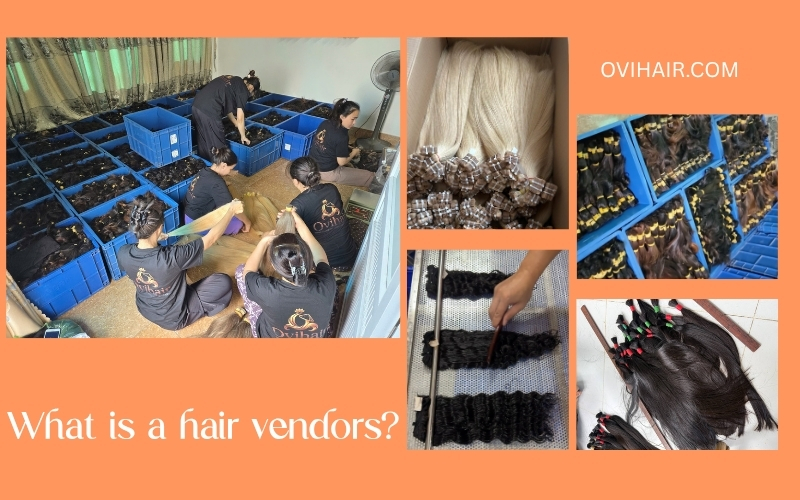
A hair vendor is simply the business you buy your hair products from — bundles, wigs, closures, frontals, or bulk hair — to resell to your own customers. Some vendors manufacture the hair themselves, while others act as middlemen who source from factories and resell at a markup.
Vendor vs. Manufacturer vs. Distributor — What’s the Difference?
Knowing which one you’re actually talking to matters. These terms get used interchangeably, but they’re not quite the same thing:
- Manufacturer – Processes raw hair into finished bundles, wigs, or extensions, often owning or working directly with the factory.
- Vendor/Supplier – A general term for anyone selling hair to businesses, whether they manufacture it or not.
- Distributor – Buys in bulk from manufacturers and resells to smaller businesses, usually at a higher price point than going direct.
Why Choosing the Right Hair Vendor Matters
Your vendor is, in a very real sense, your business. If the hair sheds after two washes or the color doesn’t match what was advertised, your customers won’t blame the vendor; they’ll blame you. Consistent quality is what turns a one-time buyer into a repeat customer, and repeat customers are what keep a hair business profitable.
This isn’t a small market, either. Industry research values the global hair extension and wig sector well into the billions of dollars, with human hair products holding the largest share thanks to their natural look and versatility. Some forecasts put the broader hair extension market on track to roughly double over the next several years. In other words, there’s real opportunity here; but also real competition, which makes vendor quality a genuine differentiator, not just a nice-to-have.
Step 1: Define Your Hair Business Needs Before You Search
Before you even open a search engine, get clear on exactly what you’re looking for. Vendors specialize in different products, and going in without a clear picture usually leads to wasted time messaging suppliers who aren’t a fit.
Raw Hair vs. Remy Hair vs. Synthetic Hair
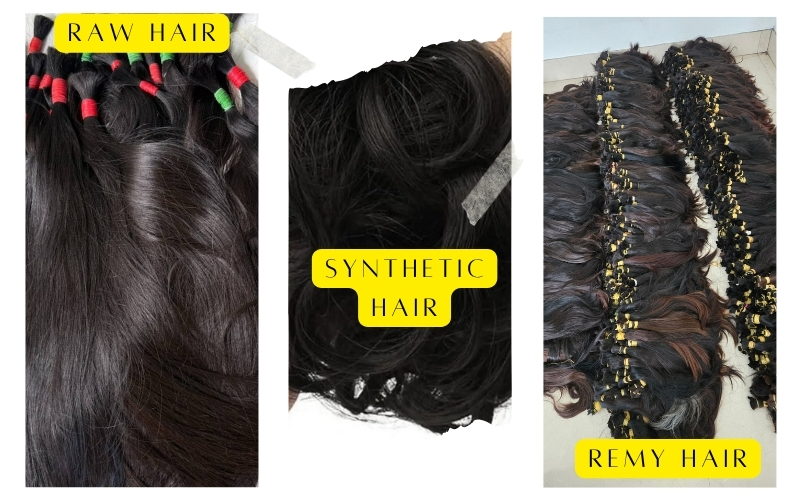
- Raw hair is collected directly from a single donor, unprocessed, with the cuticles intact and aligned in one direction. It’s the highest quality option and typically the most expensive.
- Remy hair has usually been steam-processed to add texture (like curls or waves) and can been chemically altered otherwise.
- Synthetic hair is made from man-made fibers. It’s the most budget-friendly option and a common choice for braiding hair, since braiding styles don’t always require the styling versatility of human hair.
Bundles, Closures, Frontals, or Bulk Hair?
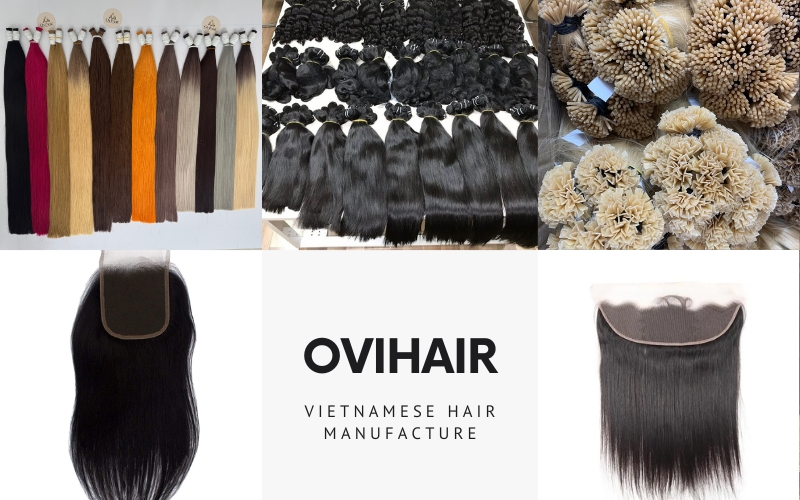
Think about your product mix. Are you selling full bundles, closures and frontals for wig-making, bulk hair for braiding, or finished wigs ready to wear? Some suppliers specialize in one category. Forexample, plenty of braiding hair wholesale vendors focus almost exclusively on bulk and pre-stretched braiding hair rather than bundles or lace units.
Budget and MOQ (Minimum Order Quantity) Considerations
Almost every wholesale vendor has a minimum order quantity, and it varies a lot from supplier to supplier. Decide early on:
- How much capital you can realistically commit upfront
- Whether you need small trial batches or can commit to bulk from day one
- What your target profit margin needs to be once vendor pricing, shipping, and fees are factored in
Getting this clear before you start reaching out saves you from falling in love with a vendor whose MOQs don’t match your budget.
Step 2: Where to Find Hair Vendors
Once you know what you’re looking for, it’s time to actually search. Here’s where most legitimate hair vendors tend to show up.
| Channel | Best For | Pros | Cons |
| Google search | Broad research, comparing suppliers | Easy to filter by keywords like “raw hair vendor” or “braiding hair wholesale vendors” | Results are crowded with low-quality or unverified sellers |
| Alibaba & B2B marketplaces | Bulk wholesale, factory-direct options | Large selection, buyer protection tools | Requires careful vetting; quality varies enormously |
| Instagram & TikTok | Seeing real product in use, customer tags | Visual proof, easy to DM directly | Can be flooded with resellers, not original suppliers |
| Facebook groups | Peer recommendations, community insight | Honest reviews from other hair business owners | Advice quality varies; always verify claims independently |
A quick Google search for “hair vendor” or “hair vendor list” will return thousands of results, and honestly, most people stop there. The businesses that actually build a reputation for reliability go a step further; they cross-reference what they find on Google with what real customers are saying on Instagram, in Facebook groups, and on independent review sites.
Step 3: How to Vet and Verify a Hair Vendor
This is the step people skip but a few extra hours of vetting now can save you months of headaches later.
Check Business Registration & Years in Operation
A legitimate vendor should be willing to share basic information about how long they’ve been operating and where they’re based. New accounts with no history aren’t automatically a scam, but they do warrant extra caution.
Read Reviews on Trustpilot, BBB, and Sitejabber
Don’t rely only on testimonials posted on the vendor’s own website — of course those are positive. Check third-party platforms like Better Business Bureau and Trustpilot, and pay close attention not just to the reviews themselves but to how the vendor responds to negative ones. A vendor who addresses complaints professionally is a good sign; one who ignores or deletes them isn’t.
Request Factory or Sourcing Videos, or a Video Call
Reputable vendors are usually happy to show proof of where their hair comes from — factory footage, sourcing videos, or even a live video call. If a supplier gets cagey or defensive when you ask for this, take it as a warning sign.
Order Samples Before Bulk Buying
This step is non-negotiable. Order a small sample before committing to a bulk purchase, and actually test it:
- Wash it and let it air dry — does it hold its texture?
- Try a gentle heat or color test if that’s relevant to your product line
- Check how it feels after a few days of wear — does it tangle or shed excessively?
Skipping the sample stage to save time is one of the most common (and costly) mistakes new hair business owners make.
Ask the Right Questions
Before placing a real order, get clear answers on sourcing, shipping timelines, payment terms, and return policies. We cover the full list of questions worth asking in our guide to questions to ask a hair vendor, which is worth reading before your first real conversation with a supplier.
Step 4: Red Flags That Signal an Unreliable Hair Vendor
Not every vendor is trying to scam you, but a few warning signs consistently show up before things go wrong.
- Prices that seem too good to be true. Genuine raw or virgin human hair has a real production cost. If a “raw hair” price is dramatically lower than everyone else’s, it’s very likely mislabeled or lower-grade processed hair.
- No return or refund policy. A vendor with confidence in their product will stand behind it. No policy — or a vague one — usually means they’re not planning to make things right if something goes wrong.
- Poor or inconsistent communication. Slow replies, contradictory answers, or pressure to pay immediately before you’ve had time to ask questions are all signs of a vendor who doesn’t want scrutiny.
- No verifiable reviews or business history. If you genuinely can’t find independent proof this vendor has sold to real customers before, treat that as a serious caution flag, not just an inconvenience.
Step 5: Questions to Ask a Hair Vendor
Once you’ve narrowed your list, come prepared with specific questions rather than the generic ones copy-pasted from a random blog. Some worth asking every hair vendor:
- Where does your hair come from, and can you prove it?
- What’s your minimum order quantity, and does it scale with order size?
- Can I order a sample before placing a bulk order?
- What are your payment terms, and do you offer any buyer protection?
- What’s your average production and shipping timeline?
- What happens if I receive a damaged or incorrect order?
- Do you offer private labeling or custom packaging?
- How consistent is quality across different batches?
The goal isn’t to interrogate every vendor with every question on this list — it’s to ask the ones that actually matter for your specific business model.
How Much Do Hair Vendors Charge?
Pricing shifts quite a bit depending on hair type, length, and where a vendor sits in the supply chain, but here’s a general sense of what to expect going in.
Raw Hair vs. Remy Hair Price Ranges
Raw hair typically commands the highest price, since it’s unprocessed and sourced from a single donor. Remy hair, which involves steam processing, generally costs somewhat less, and synthetic hair sits at the lowest price point of the three, which is part of why it remains such a popular entry point for newer hair businesses.
Wholesale vs. Retail Pricing
Buying wholesale should get you noticeably better pricing than shopping retail, but don’t assume “factory-direct” automatically means the lowest possible price. Larger, more established vendors often charge more than very small sellers do; not necessarily because they’re padding margins, but because running a bigger operation with proper quality control and customer support genuinely costs more. When comparing vendors, weigh price against consistency and service rather than focusing on price alone.
Final Thoughts
Learning how to find a hair vendor isn’t about finding the first supplier that pops up on Google; it’s about building a repeatable process you can trust every time you place an order. Define what you need, search across multiple channels, vet thoroughly, test samples, and don’t be afraid to walk away from a deal that feels rushed or vague. At Ovihair, we’ve built our business on being the kind of vendor we describe in this guide: transparent sourcing, real samples, and honest communication from the first message. If you’re evaluating vendors and want to see what that looks like in practice, get in touch with our team.
