
Uncategorized
Cambodian Hair vs. Vietnamese Hair: A 2026 Comparison
Aug
The premium hair extension market has shifted dramatically in recent years, with Southeast Asia now dominating the global supply chain. As buyers become more educated about hair quality, many are moving away from heavily processed options in favor of raw, single-donor extensions. Two origins sit at the top of that market: Cambodia and Vietnam. Both produce hair that stylists and salon owners prize, but each has a distinct personality, and the right choice really comes down to what you’re trying to achieve.
If your business depends on scale, consistency, and pricing that lets you compete on volume, your sourcing decisions will look very different from a stylist who’s mainly chasing texture and body for a single client. This guide walks through where each type of hair comes from, how it behaves under color and heat, and how to tell them apart — so you can buy with more confidence.
Quick Comparison
Feature | Cambodian Hair | Vietnamese Hair |
Texture | Coarse, slightly wavy, naturally drier | Silky, smooth, sleek |
Volume | High volume, bouncy, lightweight | Denser, heavier, flatter drape |
Bleaching | Best suited to warm blondes and browns | Lifts cleanly to platinum (#613) |
Lifespan | 1–3 years with consistent care | Often 2–3+ years thanks to thicker cuticles |
Signature strength | Holds curls for days | Goes bone-straight with minimal effort |
Actual Image |
|
|
What Is Cambodian Hair?
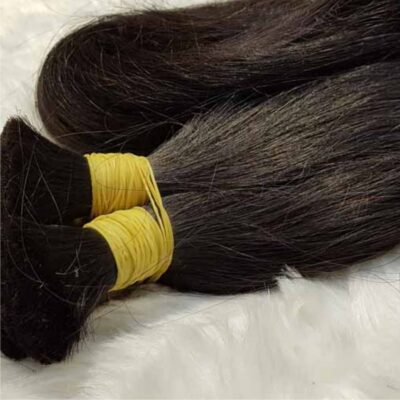
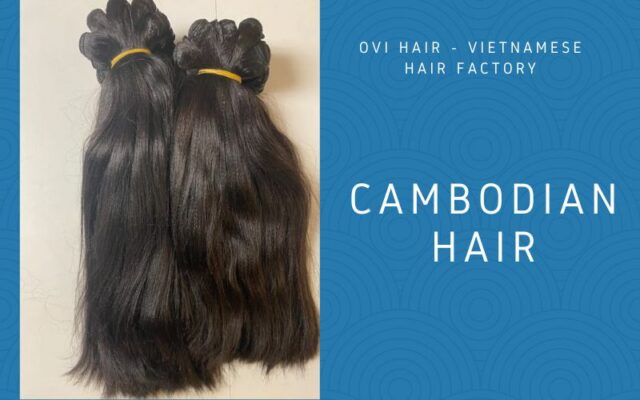
Cambodian hair is sourced directly from women in Cambodia, retaining all of its natural characteristics and properties.
Origin and Sourcing
Genuine Cambodian hair comes mainly from women in the country’s rural provinces, and it’s collected in a way that looks more like a cottage industry than a factory operation. Collectors travel village to village, buying ponytails directly from women who’ve grown their hair specifically to sell it.
Because this is a small-scale, single-donor system rather than mass production, supply stays genuinely limited. Batches are washed and wefted by hand in smaller quantities, which helps preserve the hair’s raw character — but it also means large wholesale orders are harder to fill consistently.
Key Characteristics
The defining feature of Cambodian hair is its coarser texture. That might sound like a downside, but in extension terms it means durability, body, and movement. The strands are a bit thicker, with a micro-texture that gives the hair real natural lift.
In color, Cambodian hair usually falls in the off-black to dark brown range — often described as a #1B shade — rather than a true jet black. Because the cuticles sit slightly textured rather than glass-smooth, the hair has a soft, natural sheen instead of a high-shine finish, which makes it blend especially well with naturally textured or relaxed hair.
What Is Vietnamese Hair?
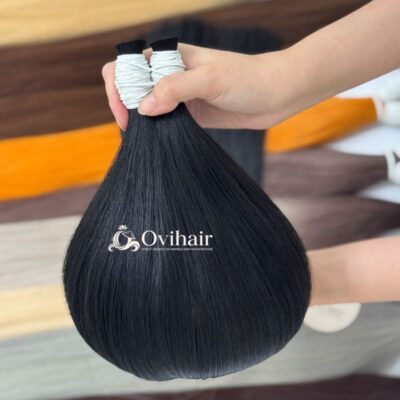
Much like Cambodian hair, Vietnamese hair is sourced directly from local women, fully retaining its natural texture and properties.
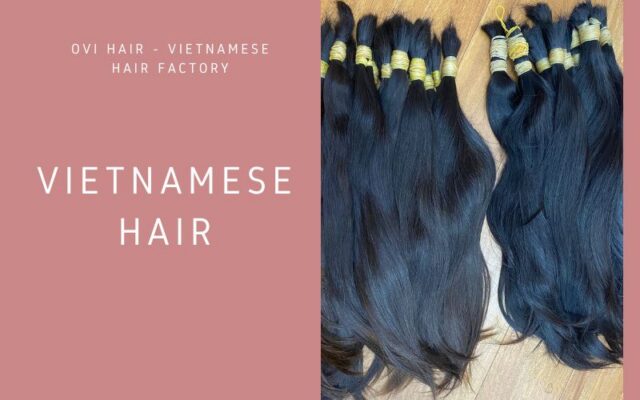
Origin and Sourcing
Vietnamese hair is closely tied to the country’s geography and traditions. It’s typically sourced from women in the mountainous northwest provinces, where cooler climates and traditional routines mean many donors avoid chemical shampoos and heat styling altogether. Hair is often washed with a boiled mix of herbs — locust, bodhi leaf, and grapefruit peel are commonly mentioned — which is believed to condition and strengthen the hair over time.
Unlike Cambodia’s smaller-scale operations, Vietnam has built substantial factory infrastructure for processing raw hair at volume. That capacity is what lets Vietnamese vendors fill large, consistent wholesale orders reliably.
Key Characteristics
If you’re after sleek, uniform perfection, Vietnamese hair is generally considered the benchmark. Its most visible trait is a deep, true black (#1) color, with a shine that reads as healthy right out of the bundle.
Structurally, it’s known for thick, resilient cuticles — a combination of genetics, herbal care routines, and cooler climate conditions. That density gives it more weight per inch, so a bundle will typically feel heavier and silkier than the same length in other hair types, resulting in an install that lays flat and smooth.
Head-to-Head: Five Categories That Matter
Texture, Feel, and Volume
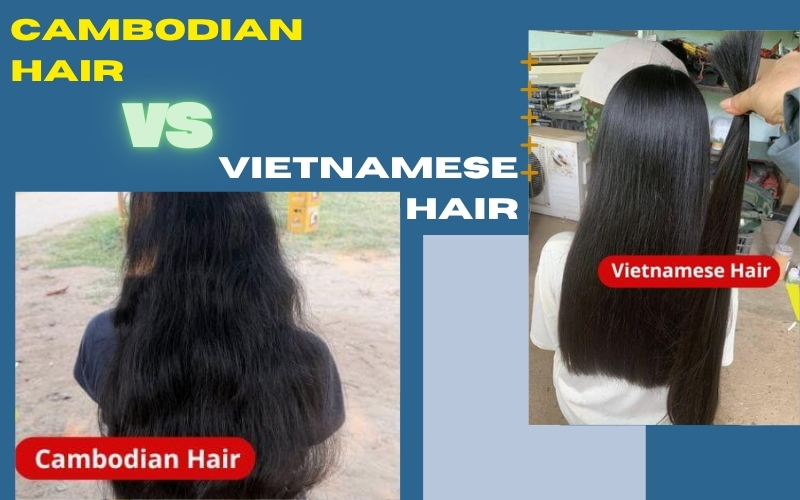
Run your fingers through a bundle of Cambodian hair and you’ll notice grip almost immediately — it’s textured, bouncy, and holds shape well, so even a modest number of bundles can look full.
Vietnamese hair feels closer to liquid silk: heavier, flatter, and without that same coarse grip.
Cambodian hair won’t give you the same airy volume as Vietnamese hair, but it drapes beautifully for sleek, blunt, long styles.
Bleaching and Color
This is where the two origins diverge most. Vietnamese hair’s thick cuticles generally hold up well to aggressive lightening, which is why it’s the more common choice for stylists lifting hair to platinum (#613) or other icy tones — the structure tends to tolerate higher-volume developer without falling apart.
Cambodian hair can still be colored, but because the strands are naturally drier and coarser, pushing it all the way to #613 carries more risk of brittleness. It tends to perform better at warm caramel, honey, or rich brown tones rather than extreme lightening.
Styling: Curls vs. Straight
Your daily styling habits should really drive this decision. If you like big waves or tight curls, Cambodian hair tends to hold shape for days without much upkeep — the coarser texture creates natural friction that keeps curls intact longer.
Vietnamese hair, on the other hand, tends to loosen curls faster simply because of its weight; a tight curl in the morning may soften into a loose wave by evening. Where it shines is straight styles — a single pass with a flat iron typically produces a smooth, frizz-resistant finish, even in humidity.
Durability and Lifespan
Both hold up well compared to heavily processed alternatives, but their timelines differ. Vietnamese hair’s thicker cuticles and chemical-free sourcing routine mean a well-maintained bundle often lasts 2 to 3 years or more, resisting tangling and matting along the way.
Cambodian hair typically lasts 1 to 3 years. Its natural dryness means it needs a more consistent moisturizing routine — sulfate-free conditioners in particular — to avoid brittleness over time.
Supply and Pricing
For buyers thinking about logistics, not just quality, this matters as much as texture does. Vietnam’s established factory infrastructure supports steady, large-volume orders, and donors there tend to grow hair long enough to supply lengths up to 36 inches or more.
Cambodian hair tends to run pricier simply because of scarcity — collecting from individual donors village by village takes time, and long hair (beyond 28 inches) is genuinely rare. If you come across bulk “Cambodian” hair advertised at 40 inches, it’s worth asking questions, since that length is uncommon enough to suggest mixing or mislabeling.
Three Ways to Tell Them Apart
Water test: Wash a bundle with mild shampoo and let it air-dry without combing. Cambodian hair tends to form a soft, textured wave as it dries; Vietnamese hair usually stays close to straight, maybe with a slight wave at the very ends.
Touch test: Run a single strand between your fingers with your eyes closed. A perfectly smooth, thread-like feel points to Vietnamese hair; a slight grip or microscopic texture points to Cambodian.
Air-dry test: Watch how the hair behaves as it dries. Cambodian hair tends to expand and look fuller; Vietnamese hair generally stays sleek and drops straight down.
Which Should You Choose?
There isn’t a single right answer here — it depends on who’s buying and what they need it for.
If you run a salon or wholesale business: Vietnamese hair is often the more practical choice operationally. The factory infrastructure supports consistent bulk reordering, competitive pricing supports better margins, and its ability to lift cleanly to platinum gives stylists a flexible base for custom coloring. The availability of longer lengths also fits current demand for sleek, extra-long installs.
If you’re buying for personal use: let your styling habits decide. Go with Cambodian hair if you want big, bouncy curls or a natural-looking blend with textured hair. Go with Vietnamese hair if your look is sleek and straight and you want something that holds its shape with minimal daily effort.
Frequently Asked Questions
Is Vietnamese hair good quality?
Yes, Vietnamese hair is considered good quality. In fact, even without directly comparing it to hair from other countries, Vietnamese hair stands out as an ideal choice for businesses and salon owners.
Is Cambodian hair better than Vietnamese hair?
Neither is objectively better — they’re suited to different things. Cambodian hair tends to win on volume, curl retention, and blending with textured hair. Vietnamese hair tends to win on straight styles, extreme lightening, and longer lengths.
Why is Cambodian hair often described as lighter than Vietnamese hair?
Vietnamese hair is typically the darker of the two, with a true jet-black (#1) shade linked to donor genetics and herbal hair care routines. Cambodian hair usually falls closer to off-black or dark brown (#1B).
Which one lasts longer?
Vietnamese hair tends to last somewhat longer on average — often 2 to 3+ years — thanks to its thicker cuticles. Cambodian hair typically lasts 1 to 3 years and needs a more consistent moisturizing routine to stay in good condition.
A Note on Choosing a Vendor
Whichever origin you choose, the real risk in this market is mislabeling — hair sold as one origin that’s actually blended or mixed with another. If you’re sourcing Vietnamese hair specifically for its lightening ability and long-term durability, it’s worth asking any vendor, including Ovihair, about their sourcing practices, factory standards, and how they verify origin before you commit to a wholesale order.
