
Uncategorized
Raw Indian Hair Vendors Sourcing Guide 2026
Aug
Finding a trustworthy raw hair vendor is the single biggest factor in delivering consistent quality to your clients. For salon owners, distributors, and wig makers, sourcing directly from reputable manufacturers in India protects your margins — but the market is also full of synthetic blends and low-grade fiber sold as premium bundles, and telling the two apart is what separates a durable business from one fielding constant complaints.
This guide covers where genuine raw hair comes from, how it differs from virgin and processed alternatives, how to test a sample order before buying in bulk, and what to expect from a few well-known vendors in this space.
Where Real Raw Indian Hair Comes From
To understand why raw hair commands a premium, it helps to understand how it’s actually collected.
Temple tonsuring
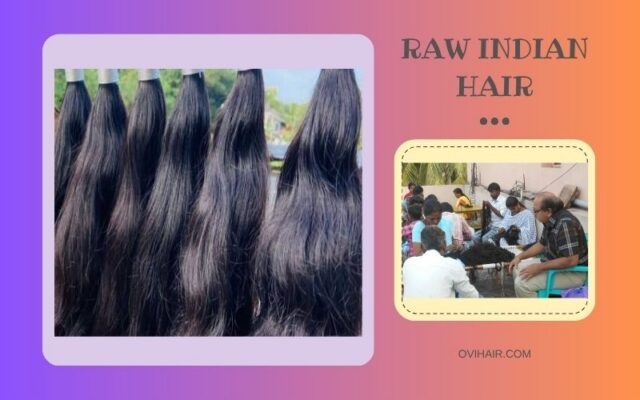
The supply chain for the highest-quality raw hair begins with tonsuring — a religious practice at major South Indian temples, most famously Tirupati, where millions of pilgrims shave their heads each year as an act of devotion. Collectors use a “band technique,” tying the hair at the scalp just before cutting so the root-to-tip direction is preserved from the moment of harvest. This is what keeps the cuticles aligned and prevents the hair from tangling later.
Government-supervised auctions
Temple authorities auction the collected hair under government oversight, and established vendors buy through these regulated channels rather than informal markets. The revenue from these auctions is typically reinvested in the local community — funding schools, hospitals, and infrastructure. It’s a detail worth sharing with clients, since it gives the origin story real substance beyond marketing language.
Single-donor sourcing
The defining feature of genuine temple hair is that it comes from one donor and stays together as a batch. This preserves the hair’s natural lipid layer and structural integrity, and it’s why you see subtle, natural color variation rather than a flat, uniform shade. Single-donor hair is the standard that luxury wig makers look for.
Raw Hair vs. Virgin Hair vs. Non-remy Hair
The terminology in this industry gets thrown around loosely, so it’s worth defining clearly.
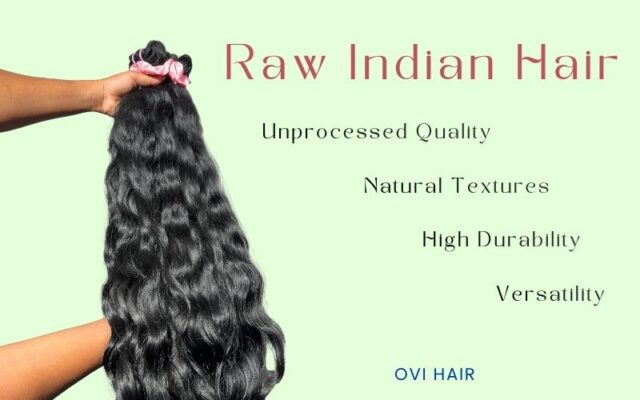
Raw Indian hair is completely unprocessed — no dye, no heat styling, no steam treatment. Reputable vendors hand-sort it, wash it with mild cleanser, and air-dry it. You can recognize it by natural color variation (black through dark brown) and slightly irregular texture, since it hasn’t been forced into a uniform pattern.
Virgin Indian hair is a step down. It’s still free of dye or bleach, but it’s treated with high-pressure steam to create standardized curl patterns (deep wave, kinky curly, water wave, etc.). Virgin hair is also sometimes blended from multiple donors to achieve consistent thickness across a bundle — which can slightly disrupt cuticle alignment compared to single-donor hair, though it remains a solid mid-tier option.
Non-Remy hair is the category to watch out for. This is non-Remy hair collected from salon floors or hairbrushes, where root and tip directions are completely mixed. To make it sellable, factories typically:
- Acid-bathe it to strip the cuticle and prevent tangling — which also weakens the hair’s inner structure.
- Coat it in silicone to fake a smooth, healthy look. The silicone washes out after one to three shampoos, leaving matted, dry hair underneath.
- Dye it flat black to hide the fact that different colors and hair types have been mixed together.
| Feature | Raw Hair | Virgin Hair | Non-Remy hair |
|---|---|---|---|
| Processing | None (washed, air-dried) | Steam-styled for uniform curl | Acid-bathed, silicone-coated |
| Donor origin | Single donor | Sometimes blended | Mixed floor sweepings |
| Cuticle status | Fully intact and aligned | Mostly intact | Stripped |
| Longevity | 3–5+ years | 1–2 years | A few washes before matting |
| Color | Natural variation | Natural but standardized | Flat, uneven color |
Five Tests to Run on a Sample Order
Even with a well-reviewed vendor, it’s worth verifying a sample before placing a bulk order. These five tests take a few minutes and catch most of the common red flags.
1. Burn test.
Snip a small strand and hold it to a flame. Real human hair burns slowly, turns to fine ash, and smells like burnt feathers. Synthetic fiber melts into hard plastic beads and gives off thick black smoke.
2. Water reversion test.
Soak the bundle in water. Raw or virgin hair snaps back to its natural wave or curl as it dries. Chemically permed or damaged hair stays limp or turns frizzy instead.
3. Flat iron reversion test.
Straighten a curly or wavy bundle with a flat iron, then wash it. Quality hair reverts cleanly to its original curl pattern. Synthetic or heavily processed hair either won’t revert or shows signs of heat damage.
4. Scent and grip test.
Smell the bundle straight out of the packaging — a sharp, acidic, “corn chip” odor points to an acid bath. Then run your fingers upward along a strand, from tip to root. You should feel slight natural friction from intact cuticles. Chemically stripped hair feels unnaturally slippery or glassy from silicone coating.
5. Weft and scratch test.
Run your fingernails firmly along the weft and tug gently near the track. Immediate shedding usually means weak glue or thin stitching — a problem that shows up later as matting, especially in curly textures.
Top 5 Raw Indian Hair Vendors
The profiles below summarize publicly stated policies and manufacturing claims from each vendor. Terms like return windows, fees, and MOQs change, so confirm current policy directly with the vendor before ordering — don’t rely solely on this summary.
1.Dhwarak Indian Hair
Sources from South Indian temples with strict single-donor sorting, and uses Japanese wefting machines aimed at reducing shedding. Offers a 14-day return window — generous for an overseas vendor — but returns carry a 15% restocking fee, and shipping/transaction costs are non-refundable.
2. Hair Cloud India
Holds MSME, DPIIT, and MCA certifications and FIEO Prestige Membership, and supports ACH (US) and SEPA (EU) payments for easier wire transfers. Requires a 1 kg minimum order. Known for fast, predictable dispatch, but custom orders have limited return options, so specifications need to be precise upfront.
3. Indique Hair
A multi-origin raw hair brand manufacturing in Chennai with US showrooms in Atlanta, New York, and Boston. Offers a $1,500 private-label program and a $49/year professional cosmetologist program. Returns on wigs are limited to a 7-day window, and original tags must remain attached.
4. SGI Hair
Founded in 1977, one of the longer-established players in this market. Sources traditional temple hair alongside steam-styled patterns for buyers who want uniform texture, and sells in 100g packs rather than standard bundles. US buyers should budget for a potential 18% customs duty on direct shipments from India.
5. Remy & Virgin Hair Extensions
Supports flexible payment methods (Zelle, Cash App, WhatsApp) and ships via FedEx with signature confirmation. Returns are limited to 7 days, and outbound shipping costs are deducted from refunds — including on orders originally marketed as free shipping.
Note Important
The safest approach for any buyer is to combine due diligence with documentation: verify auction and sourcing claims where possible, run the sample tests above before committing to a bulk order, and get return, fee, and MOQ terms in writing rather than relying on a vendor’s marketing copy. Raw hair commands a premium because it earns it — but that’s only true when the sourcing and testing are done properly on your end too.
